
Understanding performance, temperature limits, and when to choose each material
When selecting a fiberglass-reinforced laminate for electrical or structural applications, two materials come up frequently: G10 and G11. At a glance, they appear nearly identical; both are epoxy-based laminates reinforced with woven glass cloth, but their performance diverges when temperature becomes a factor.
Understanding where they differ is key to choosing the right material for long-term reliability.
What Are G10 and G11?
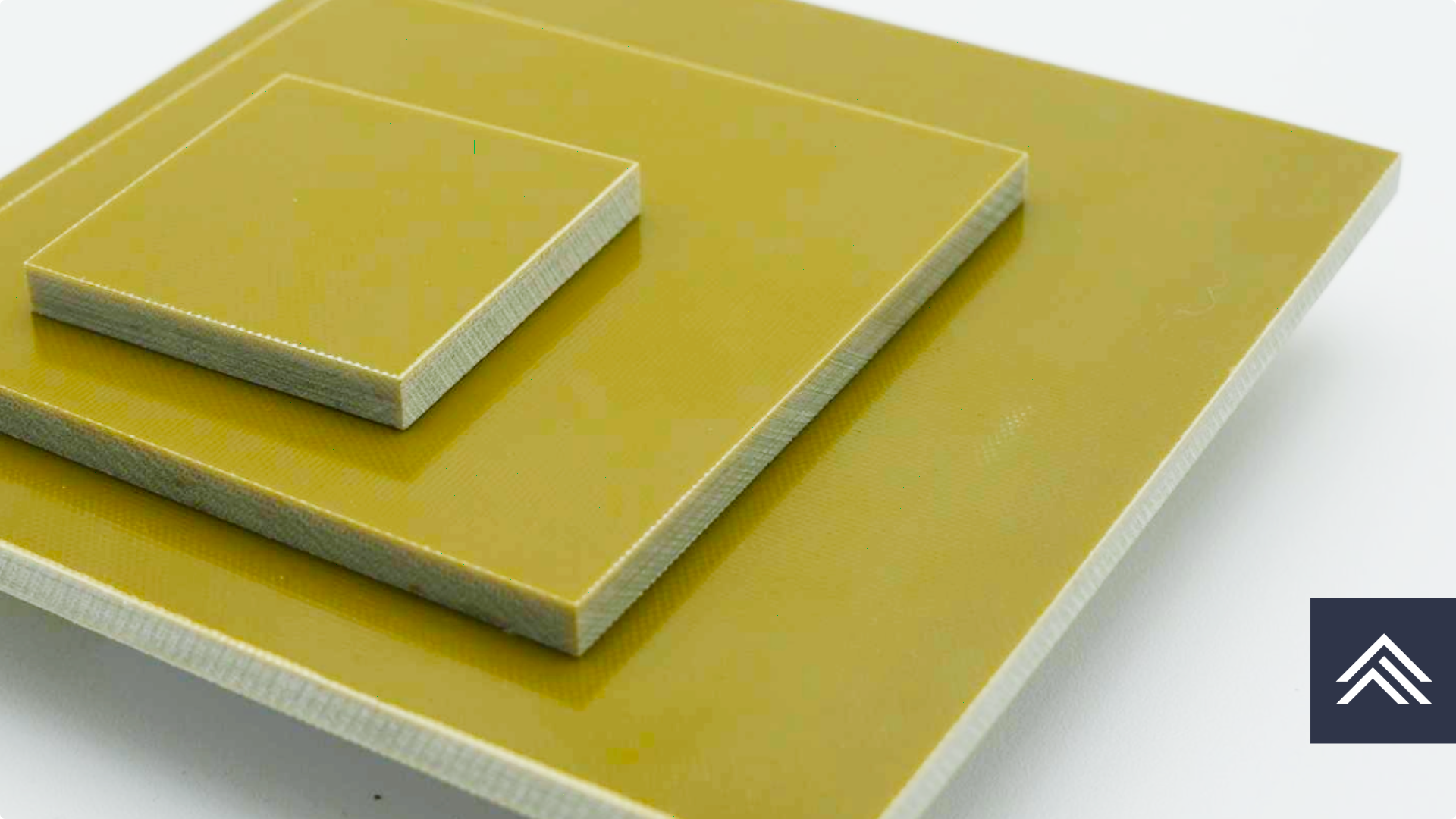
G10 and G11 are both NEMA-grade thermoset composite laminates manufactured by layering fiberglass cloth with epoxy resin and curing under heat and pressure. The result is a dense, rigid material with excellent mechanical strength and electrical insulation properties.
While they share the same base construction, the resin formulation is what sets them apart.
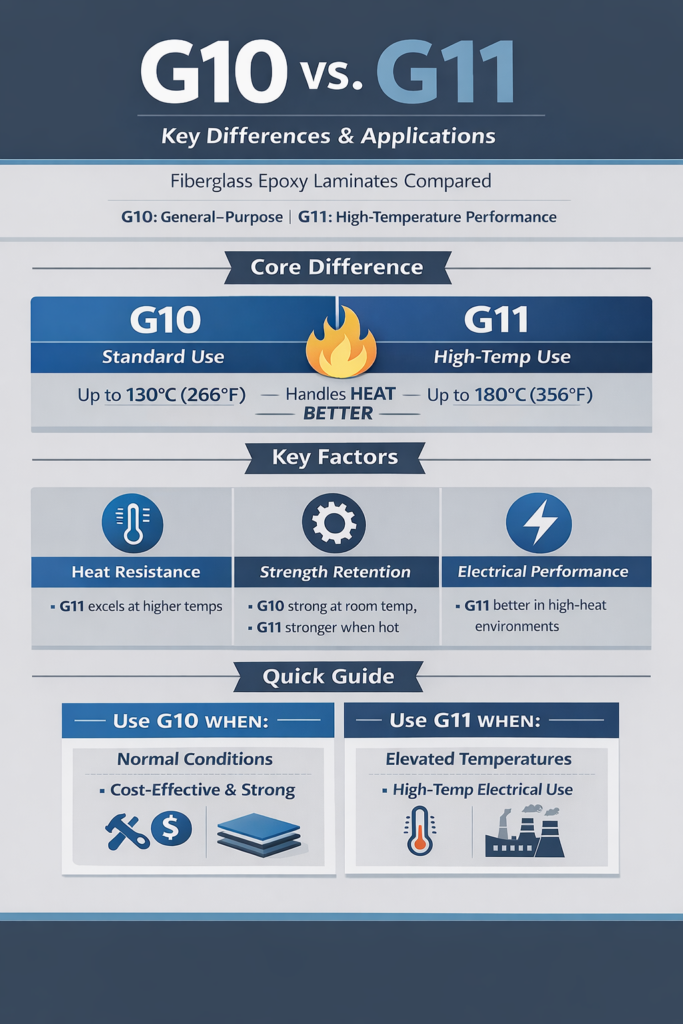
The Core Difference: Temperature Performance
The primary distinction between G10 and G11 comes down to thermal capability.
- G10 is a general-purpose grade, optimized for strength, machinability, and cost-effectiveness in standard operating environments.
- G11 is engineered for elevated temperature performance, maintaining its properties more effectively under sustained heat.
In practical terms, G11 is the better choice when heat is part of the equation – especially in electrical or industrial systems where performance degradation isn’t an option.
How Performance Differs in Real Applications
Heat Resistance: G11 is designed to operate at higher temperatures without significant degradation. It maintains structural integrity and insulation properties where G10 may begin to soften or lose performance.
Electrical Performance at Elevated Temperatures: Both materials are strong electrical insulators, but G11 retains dielectric strength more effectively as temperatures rise, making it more reliable in high-heat electrical environments.
Mechanical Strength Retention: At room temperature, G10 can be slightly stronger and more rigid, which makes it a great choice for structural applications. However, as temperatures increase, G11 retains its strength more consistently, while G10 may experience gradual performance loss.
Cost and Practicality: G10 is typically more cost-effective and widely available, making it a go-to for general applications. G11, with its enhanced thermal properties, comes at a higher cost but delivers value in demanding environments.
Machinability Considerations: From a precision fabrication standpoint, both materials machine well compared to many thermosets, but there are subtle differences:
- G10 is generally easier on tooling, making it more efficient for high-volume machining.
- G11, due to its higher thermal resistance and slightly tougher resin system, can be more abrasive, leading to increased tool wear and slightly slower machining speeds.
For shops optimizing cycle time and tooling cost, this difference can be meaningful.
When Should You Use G10 vs. G11?
A simple rule of thumb:
- Choose G10 when your application operates in normal conditions and you want a strong, reliable, and cost-effective material.
- Choose G11 when your part will be exposed to sustained elevated temperatures and needs to maintain its electrical and mechanical performance over time.
G10 and G11 are closely related materials, but they’re not interchangeable. The decision ultimately comes down to temperature exposure and performance expectations.
If heat is not a concern, G10 offers excellent value and performance. But when temperature becomes a variable, G11 provides the stability and reliability needed to ensure long-term success.