

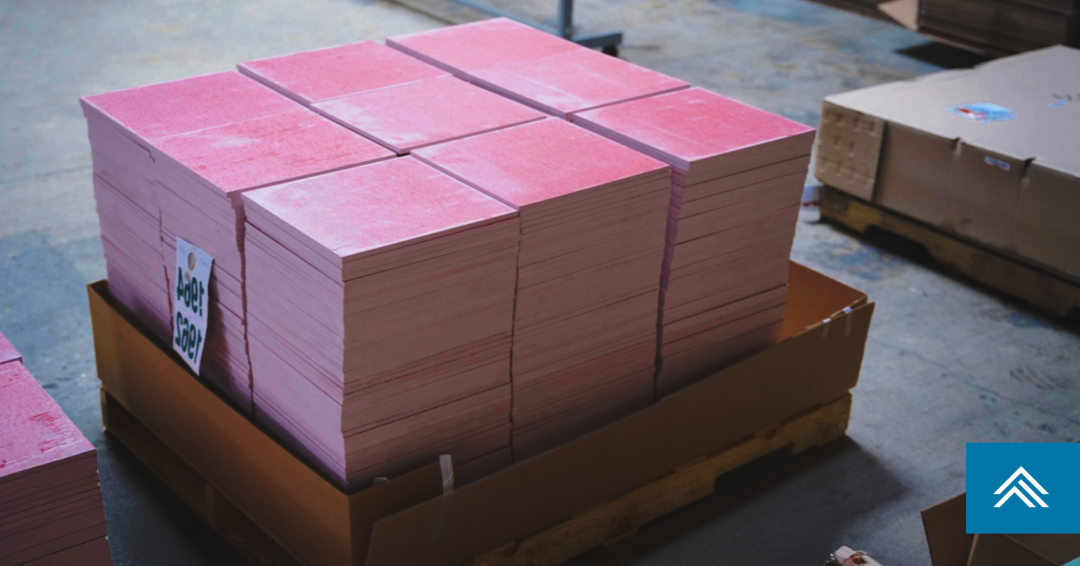
GPO-3 is a workhorse electrical insulation laminate used in switchgear, data centers, renewables, and EVs. Learn how it’s used today and why it’s growing.
As electrical systems get smaller, denser, and more energy-rich, the margin for failure keeps shrinking.
Modern switchgear packs higher fault currents into tighter enclosures. Data centers push enormous continuous current through compact busbar systems. Renewable energy inverters and battery storage cabinets combine high voltage, fast switching, vibration, and fire risk in a single package. Across all of it, engineers are being asked to do more with less space – without sacrificing safety.
That pressure has pushed renewed attention onto a class of materials most people never see but every power system depends on: rigid electrical insulation and structural laminates.
One of the most widely used – and least discussed – of those materials is GPO-3.
It isn’t new. It isn’t exotic. And it rarely shows up in headlines. But GPO-3 has quietly become a workhorse material inside many of today’s most demanding electrical systems – and it’s positioned to play an even larger role as power density continues to climb.
What GPO-3 Actually Is
At its core, GPO-3 is a glass-mat reinforced thermoset polyester laminate. Layers of fiberglass mat are impregnated with an unsaturated polyester resin and cured under heat and pressure into rigid sheets, rods, and machinable shapes.
The result is a non-metallic, non-conductive laminate designed specifically for electrical insulation—while still offering enough mechanical strength to act as a structural support material.
Under the NEMA system, GPO-3 is classified as a UL 94 V-0 flame-retardant grade, meaning it is engineered to resist ignition and self-extinguish rather than propagate flame. Electrically, it offers high dielectric strength along with excellent resistance to arc tracking—two properties that become increasingly critical as voltage, current, and fault energy rise.
In practical terms, GPO-3 sits at the intersection of three needs:
- Electrical insulation
- Fire safety
- Structural integrity
Few materials balance all three as effectively at scale. Learn more about the physical and mechanical properties of GPO-3.
Why Electrical Systems Keep Coming Back to GPO-3
Electrical insulation isn’t just about preventing conduction under normal operation. The real test happens during abnormal conditions – faults, contamination, moisture, vibration, or thermal cycling.
GPO-3 earned its reputation because it performs reliably when systems are stressed.
Its arc resistance allows it to withstand the intense energy released during electrical faults without rapidly degrading or carbonizing. Its high comparative tracking index (CTI) helps prevent conductive paths from forming across its surface in dirty or humid environments. And its flame-retardant behavior reduces the risk that an electrical failure cascades into a larger fire event.
Just as importantly, GPO-3 offers predictable mechanical performance. It’s stiff enough for supports, barriers, and mounting panels, yet machinable enough to be fabricated into complex geometries without exotic tooling.
That balance explains why GPO-3 has steadily replaced older materials – particularly certain epoxy boards – in many medium- and high-voltage applications.
Inside Today’s Power Distribution Equipment
For decades, GPO-3 has been a staple inside traditional power distribution hardware.
In switchgear, panelboards, and transformers, it appears as:
- Phase barriers and end barriers
- Busbar supports and spacers
- Insulating mounting panels
- Arc shields and protective partitions
These components may look simple, but their job is critical. During a fault event, they must maintain electrical separation, resist tracking, and survive intense thermal and mechanical stress – often in confined spaces.
As modern switchgear designs push toward higher fault currents and more compact footprints, the importance of arc- and tracking-resistant barrier materials has only increased. GPO-3 is well suited to that environment, which is why it continues to be specified in both legacy and next-generation distribution gear.
Data Centers and High-Density Power Systems
The growth of large-scale data centers – especially those supporting AI workloads – has changed the electrical landscape.
Higher rack densities, larger UPS systems, and increasingly complex power architectures mean more energy flowing through tighter spaces, often for long duty cycles. Fire performance and insulation reliability are no longer secondary considerations; they’re core design constraints.
In these environments, GPO-3 is widely used for:
- Busbar insulation and supports
- Phase separation barriers
- Switchgear panels
- Battery rack insulation in UPS and backup systems
As data centers explore on-site generation, energy storage, and DC distribution, the need for robust, flame-retardant insulating structures only grows. GPO-3’s combination of dielectric stability and fire performance makes it a natural fit for these architectures.
Transportation and Industrial Applications
Beyond stationary power systems, GPO-3 has found a home in transportation and industrial environments where electrical safety intersects with mechanical abuse.
In rail and mass transit systems, it is used for:
- Electrical panels and covers
- Safety-critical partitions
- Insulating supports in low-smoke, flame-retardant environments
- Industrial fabricators machine GPO-3 into:
- Insulating fixtures and supports
- Welding jigs and splash shields
- Precision components exposed to electrical stress
In some high-frequency and microwave applications, it even serves as antenna bases or insulating structural elements, taking advantage of its stable dielectric behavior and mechanical robustness.
The Shift Toward Renewables and Energy Storage
The future of electrical infrastructure is increasingly tied to renewable generation and energy storage – and that shift is reshaping material requirements.
Modern wind and solar inverters operate with:
- High switching frequencies
- Rapid voltage transitions (high dv/dt)
- Vibration and thermal cycling
- Outdoor or semi-exposed environments
GPO-3 sheets are increasingly specified as primary insulation and structural panels in these systems, where electrical performance must coexist with mechanical durability.
Battery energy storage systems (BESS) and large UPS installations add another layer of complexity. High-energy battery packs elevate fire risk, placing greater emphasis on flame-retardant materials for rack insulation, separator plates, and cabinet structures. GPO-3’s fire behavior and electrical reliability make it a logical choice in these safety-critical zones.
Modern Switchgear and Compact High-Voltage Equipment
As utilities and industrial users modernize distribution infrastructure, switchgear continues to evolve.
Smaller footprints, smarter monitoring, and higher fault ratings all place new demands on insulating materials. Designers need laminates that maintain performance under extreme electrical stress while supporting tighter clearances and more complex geometries.
In this space, GPO-3 is often positioned as a replacement for older epoxy laminates, offering:
- Better arc resistance
- Lower weight
- Easier fabrication
- Consistent electrical performance
These advantages matter most where reliability, service life, and safety outweigh incremental material cost differences.
Electric Vehicles and Electrified Transportation
Electrification doesn’t stop at the grid.
Electric vehicles and electrified transportation platforms must balance weight, cost, flame rating, and dielectric performance – often under aggressive thermal and vibration conditions. GPO-3 is increasingly used for:
- Battery pack supports
- Phase barriers
- Structural insulation around power electronics
It may not replace higher-end composites in every application, but it fills a crucial middle ground where performance and cost must be carefully balanced.
Why GPO-3’s Role Is Still Growing
GPO-3’s future isn’t about reinvention – it’s about alignment.
As standards tighten around fire safety, smoke generation, and environmental impact, manufacturers continue to refine halogen-free formulations and improve consistency under international specifications such as IEC 60893 and UL 94. Ongoing material optimization focuses on better moisture resistance, improved thermal stability, and enhanced machinability for increasingly complex designs.
Most importantly, the trends driving its adoption – higher power density, compact electrical architectures, and system-level safety concerns – aren’t going away.
GPO-3 isn’t the flashiest material inside modern electrical systems. It doesn’t promise revolutionary performance or redefine how power flows. Instead, it does something far more valuable: it quietly enables engineers to build safer, denser, more reliable systems in an increasingly demanding electrical world.
As power infrastructure evolves – across data centers, renewables, transportation, and industrial equipment – materials like GPO-3 remain essential not because they are new, but because they continue to work where it matters most.
And in high-power electrical systems, that reliability is everything.