

The Types of Vane Pumps, Their Tradeoffs, and Where They Perform Best
Selecting the right pump isn’t about understanding every option – it’s about understanding where each design performs best, and what enables that performance in real-world conditions.
Vane pumps occupy a specific space: they deliver consistent flow, moderate pressure capability, and strong performance with low-viscosity fluids. When applied correctly, and supported by the right materials and component precision, they offer a balance of efficiency, reliability, and smooth operation that’s difficult to match.
Explore how vane pumps work, where they excel, where they fall short, and how design, materials, and configuration impact real-world performance so you can make a more informed selection.
Key Takeaways
- Vane pumps deliver smooth, low-pulsation flow and perform best in low to medium viscosity applications
- They offer high volumetric efficiency and quiet operation, making them well-suited for controlled fluid systems
- They are not ideal for high-pressure or abrasive environments, where wear and performance degradation become limiting factors
- Proper selection and maintenance – especially around fluid compatibility and temperature control – are critical to long-term performance
- Material selection and component precision play a critical role in vane pump performance, directly impacting wear, efficiency, and long-term reliability
What Makes Vane Pumps Different
At a high level, vane pumps are designed to move a consistent volume of fluid per rotation, regardless of pressure changes within the system. That consistency is what makes them valuable in applications where flow stability matters more than peak pressure.
They are commonly used to handle:
- Fuels and solvents
- Refrigerants and gases (e.g., ammonia, propane)
- Light oils and hydraulic fluids
Their tight internal clearances and self-adjusting vanes allow them to maintain efficiency over time. Those same characteristics, however, also introduce limitations when conditions fall outside their ideal operating range. That level of consistency places added importance on the materials and precision of internal components, particularly in systems where long-term performance and reliability are critical.
How Vane Pumps Work
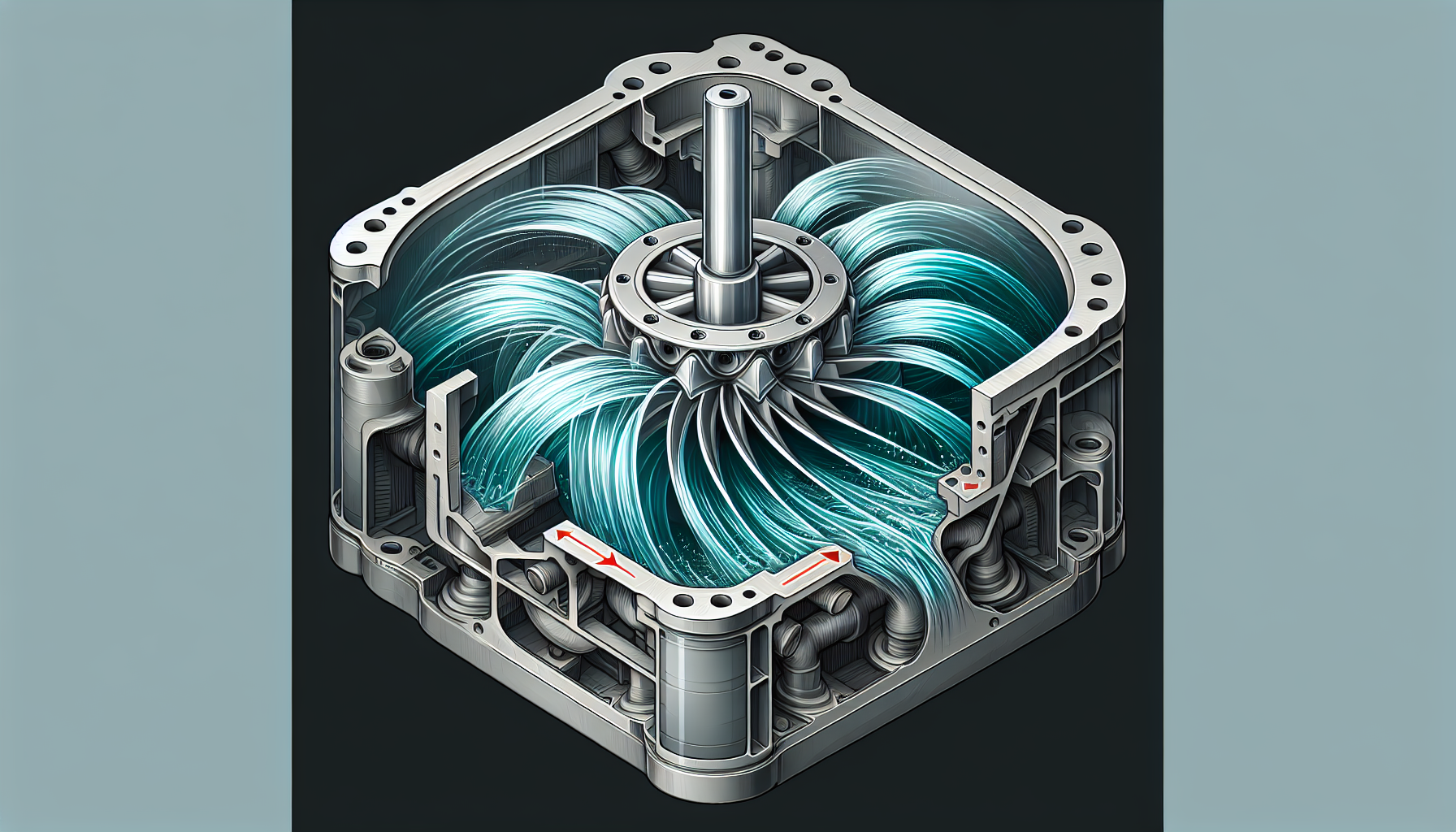
Vane pumps operate using a rotor positioned eccentrically within a cavity. As the rotor spins, vanes slide outward (typically due to centrifugal force) while maintaining contact with the housing.
This creates expanding and contracting chambers:
- At the inlet: expanding volume creates a vacuum, drawing fluid in
- At the outlet: decreasing volume forces fluid out under pressure
The result is a continuous, smooth flow with minimal pulsation.
This mechanism is simple in concept, but highly dependent on:
- Fluid lubrication properties
- Internal sealing between vane and housing
- Stable operating temperatures
Because vane pumps rely on tight internal clearances and continuous sliding contact, component material selection plays a significant role in minimizing wear and maintaining efficiency over time.
Where Vane Pumps Perform Well
Vane pumps are often selected when systems require controlled, predictable fluid movement rather than extreme pressure capability.
They are particularly effective in:
- Hydraulic systems with moderate pressure requirements
- Fuel transfer and metering systems
- Refrigeration and gas handling
- Industrial machinery requiring steady flow
Key advantages include:
- Consistent flow rates, even with pressure variation
- Quiet operation, compared to gear or piston pumps
- Self-compensating wear, extending usable life
- Lower energy consumption in many operating ranges
These advantages are most fully realized when internal components are engineered and manufactured to maintain stability under real operating conditions.
Where Vane Pumps Fall Short
Vane pumps are not a universal solution. Their design introduces clear constraints that must be accounted for early in the selection process.
They are not well-suited for:
- High-pressure applications (where piston pumps dominate)
- High-viscosity fluids, which reduce efficiency and suction capability
- Abrasive media, which accelerates vane and housing wear
Performance is also sensitive to:
- Temperature fluctuations (affecting viscosity and clearances)
- Fluid contamination
- Inadequate lubrication
In the wrong conditions, wear increases quickly—and performance drops just as fast.
Types of Vane Pumps and When They’re Used
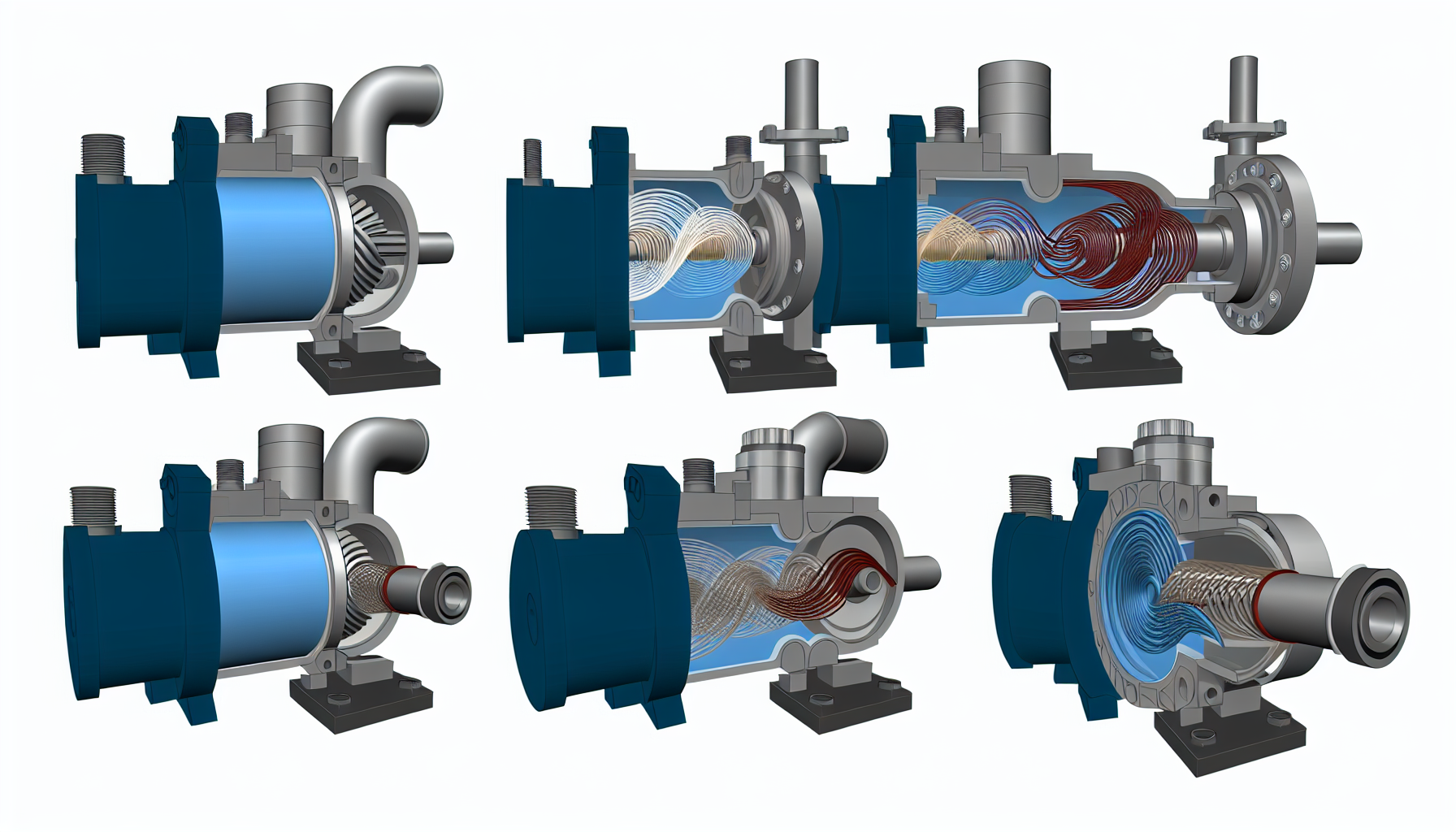
Different vane pump configurations exist to address specific operating requirements. The distinctions matter less in theory and more in how they translate to real-world performance.
Sliding Vane Pumps
The most widely used configuration, sliding vane pumps are built for consistent flow and strong suction capability.
They are commonly used in:
- Fuel transfer
- Bulk liquid handling
- Tank unloading
Their ability to strip lines and handle small amounts of vapor makes them especially useful in transfer applications.
Flexible Vane Pumps
Flexible vane pumps use elastomer impellers, allowing them to adapt to internal surfaces and handle delicate fluids.
They are typically found in:
- Food and beverage processing
- Pharmaceutical and cosmetic applications
- Marine systems
Their strengths include:
- Gentle fluid handling
- Self-priming capability
- Low shear and low pulsation
Rolling and Swinging Vane Pumps
These designs are less common but still relevant in compact or specialized systems.
Applications include:
- Beverage dispensing systems
- Automotive subsystems (e.g., power steering, compressors)
- Small-scale vacuum systems
They are typically selected where size constraints or specific flow characteristics are more important than versatility.
Variable Displacement Vane Pumps
Variable displacement vane pumps are designed to adjust output based on system demand, improving efficiency in dynamic systems.
They are commonly used in:
- Mobile equipment hydraulics
- Industrial automation systems
Instead of running at constant output, they:
- Reduce flow when demand drops
- Maintain pressure without excess energy consumption
This makes them a strong choice where energy efficiency and responsiveness are priorities.
Balanced vs. Unbalanced Designs
- Balanced vane pumps distribute forces evenly, reducing wear and extending service life
- Unbalanced vane pumps are simpler and more cost-effective but experience higher internal loads
The tradeoff is straightforward:
Balanced = longevity and stability
Unbalanced = simplicity and lower upfront cost
How Vane Pumps Compare to Other Pump Types
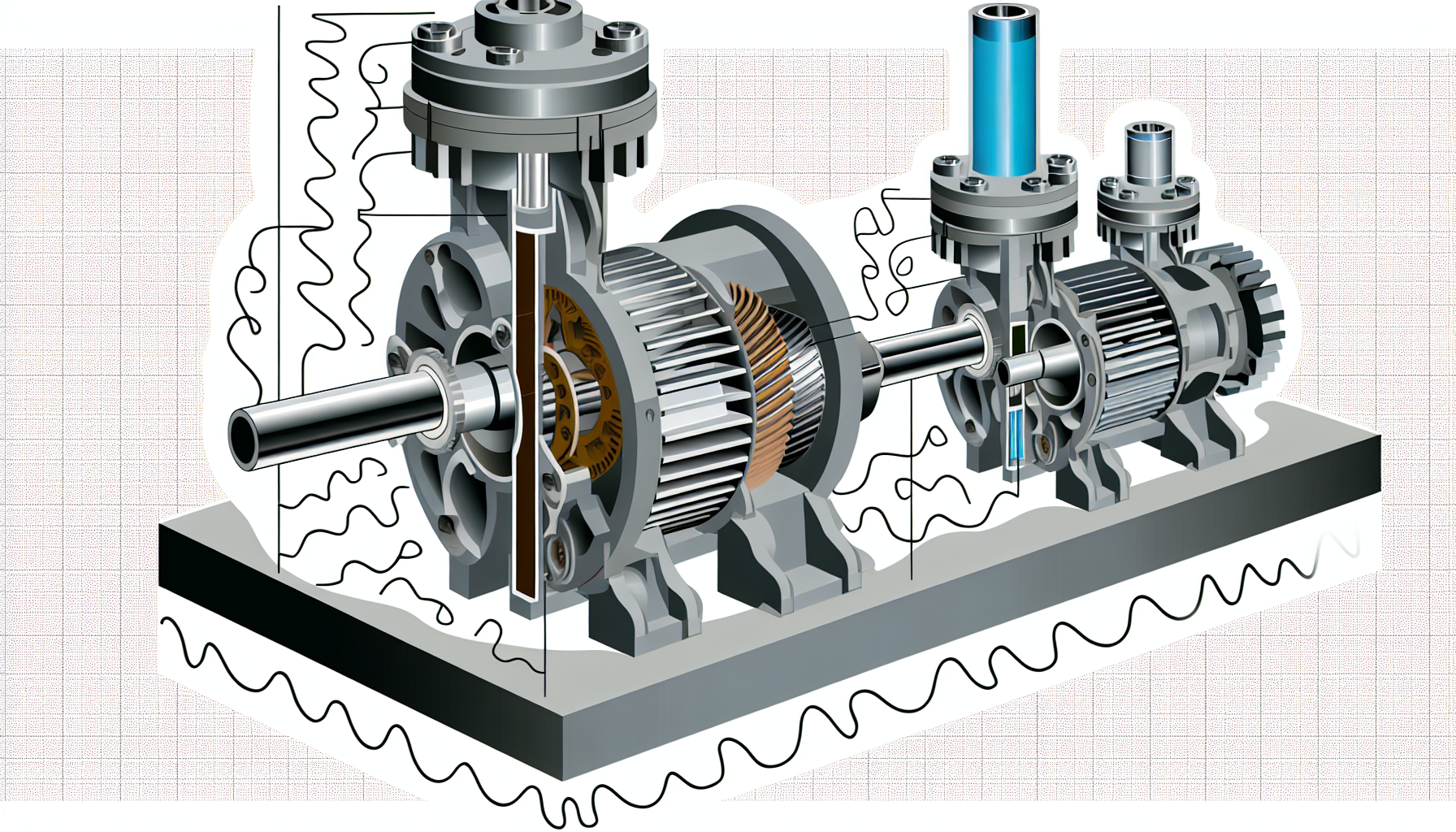
Understanding vane pumps becomes clearer when viewed in contrast with alternatives.
Vs. Gear Pumps
Gear pumps are simpler and handle higher pressures, but produce more pulsation. Vane pumps provide smoother flow and better efficiency across varying conditions.
Vs. Piston Pumps
Piston pumps dominate in high-pressure environments. Vane pumps are quieter, less complex, and better suited for moderate-pressure systems.
Vs. Screw Pumps
Screw pumps handle high viscosity fluids and large flow rates. Vane pumps are more efficient at lower speeds but require more consistent operating conditions.
Selecting the Right Vane Pump
Choosing the right vane pump comes down to a few critical variables:
- Fluid viscosity (low to moderate is ideal)
- Operating pressure (moderate, not extreme)
- Fluid cleanliness and abrasiveness
- Temperature stability
- Flow consistency requirements
If the application prioritizes smooth delivery, efficiency, and moderate operating conditions, vane pumps are often a strong fit.
If not, another pump type will likely outperform them.
Maintenance Considerations
Vane pumps are relatively straightforward to maintain, but only if the fundamentals are managed well.
Key practices include:
- Maintaining proper lubrication
- Controlling operating temperature
- Filtering contaminants effectively
- Monitoring vane wear and internal clearances
Common issues such as noise, reduced flow, or pressure instability, are often early indicators of wear or improper operating conditions.
The Atlas Fibre Perspective
Vane pumps are precision-driven systems. Their performance depends not just on design, but on how well each internal component maintains tight tolerances, resists wear, and operates consistently over time.
That’s where material selection and component manufacturing become critical.
At Atlas Fibre, we support OEMs by machining high-performance components used within vane pump systems and other critical machinery. Many of these components are produced from thermoset composite materials, which offer a unique combination of dimensional stability, wear resistance, and chemical compatibility.
In vane pump applications specifically, these material characteristics can directly influence:
- Seal integrity and internal clearances
- Resistance to wear in sliding contact environments
- Performance consistency across temperature ranges
- Compatibility with fuels, solvents, and hydraulic fluids
Unlike metal components, composite materials can eliminate issues like galling, reduce friction in certain applications, and maintain stability in environments where thermal expansion or corrosion would otherwise impact performance.
For OEMs, this translates to more predictable operation and longer service intervals, especially in systems where consistency and reliability are non-negotiable.
Vane pumps perform best within a defined operating window. Ensuring the components inside them are built with the right materials, and machined to the right specifications, is what allows that performance to be realized in the field.