

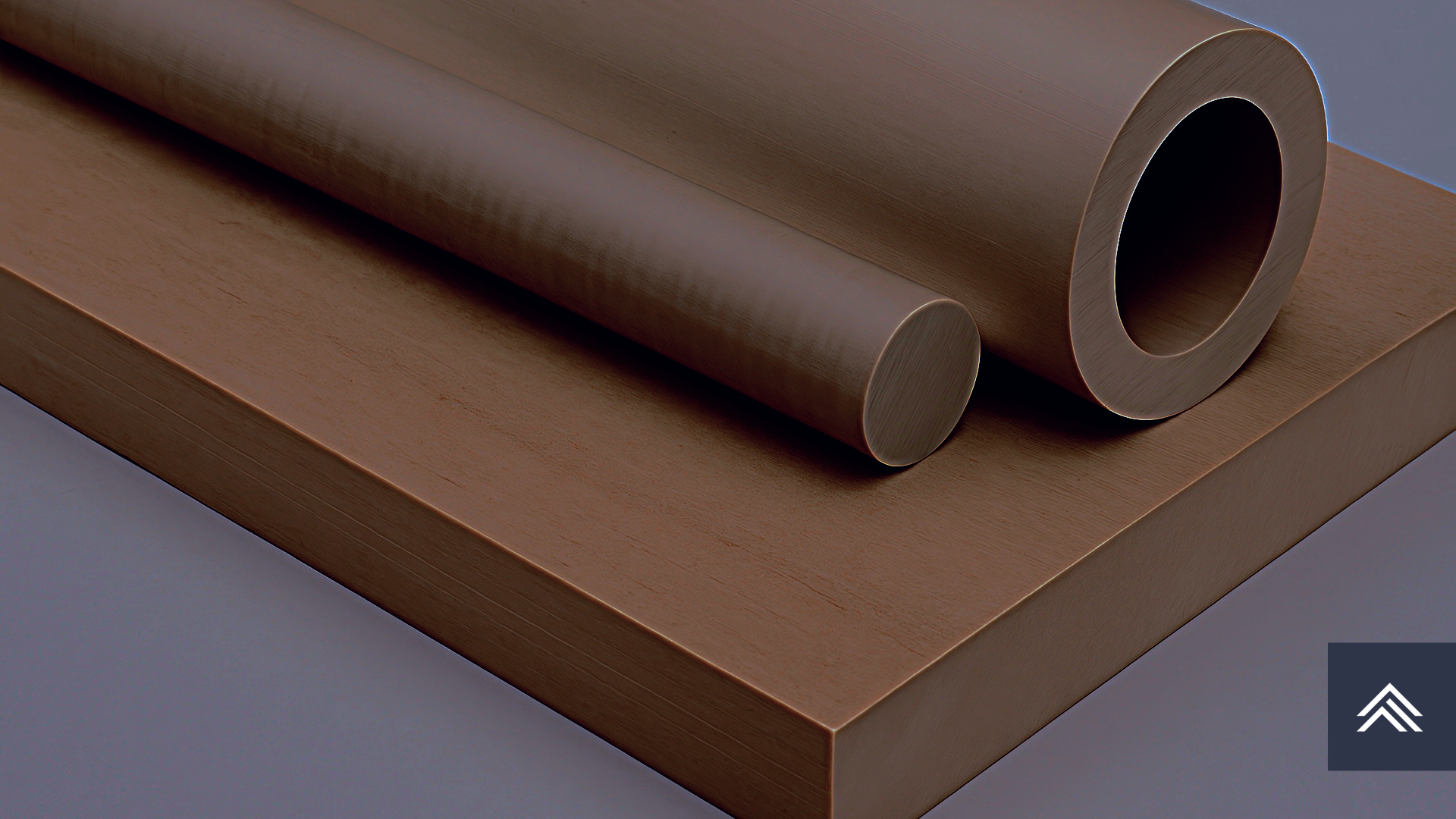
Sheet vs. Rod vs. Tube
When engineers select thermoset composite materials, most of the focus is placed on material grade (the type of material – like G10 or FR-4), mechanical properties, or electrical performance. An equally important decision, however, is often overlooked: the starting geometry of the material.
Composite laminates are commonly supplied in three primary formats – sheet (flat stock), rod, and tube.
Each shape is designed to support different types of parts and manufacturing processes. Choosing the wrong format from the start can lead to excess machining, unnecessary scrap, longer cycle times, and, you guessed it, higher overall costs.
Understanding when to use sheet, rod, or tube allows engineers to design components that are functional and efficient to manufacture for machinists.
The Three Primary Composite Material Shapes
Composite materials are typically supplied in three standard formats: sheet (flat panels), rod (solid cylindrical stock), and tube (hollow cylindrical stock). These advanced plastics are manufactured in several standard shapes as they can more easily be optimized for certain applications.
Sheet (Flat Stock)
Sheet is the most common form of thermoset composite material. It consists of flat laminate panels produced in various thicknesses and sheet sizes.
Sheet is ideal for parts that require:
- Flat surfaces
- Large planar geometry
- Multiple machined features on a single plane
- Typical applications include:
- Electrical insulation panels
- Structural mounting plates
- Switchgear barriers
- Brackets and flat mechanical components
Because sheet is versatile and widely available, it is often the default material format chosen by engineers and machinists.
However, flat stock is not always the most efficient starting geometry.
Rod
Thermoset composite rod is a solid cylindrical format developed for components that require round geometry.
Rod is commonly used for:
- Bushings
- Bearings
- Rollers
- Electrical standoffs
- Insulating pins
- Spacers
Because the starting geometry already matches the final part shape, rod typically requires less machining and generates less material waste than sheet when producing cylindrical parts.
Tube
Tube is a hollow cylindrical format designed for components with internal diameters or hollow structures.
Common applications include:
- Insulating sleeves
- Hollow spacers
- Structural tubes
- Rollers with internal shafts
- Electrical insulation sleeves
Tube reduces the need for deep boring operations and allows manufacturers to start with material that is already close to the final part geometry.
When Sheet (Flat Stock) Is the Right Choice
Sheet remains the best starting point for many composite applications.
Flat stock is ideal when the finished component requires:
- Flat surfaces
- Large planar geometry
- Multiple pockets or profiles on a single plane
- Structural panel characteristics
- Examples include:
- Electrical insulation barriers
- Switchgear panels
- Mounting plates
- Structural brackets
For these types of components, sheet allows machinists to efficiently profile and machine the part with minimal setup complexity.
When Flat Stock Becomes the Wrong Choice
Flat stock is frequently used for parts that would be better produced from rod or tube.
This often happens because sheet is readily available or because the part begins as a flat blank before being turned or machined into a cylindrical shape.
However, machining cylindrical parts from flat stock can introduce several inefficiencies.
These include:
- Excess material removal
- Increased machining time
- Higher tool wear
- Lower material utilization
In these situations, rod or tube typically provide a much better starting geometry.
Cylindrical Parts Machined from Sheet
Components such as bushings, rollers, and spacers are sometimes machined from square or rectangular blanks cut from sheet.
The machinist then turns the part on a lathe to achieve the final round geometry.
Example: Round Part Machined from Sheet
When a round part is machined from a square blank, a significant amount of material must be removed to achieve the final diameter.
By contrast, rod begins with a cylindrical profile that is already close to the finished part.
This results in:
- Less machining time
- Less scrap material
- Reduced tool wear
For cylindrical components, rod often provides a much more efficient starting point.
Hollow Components Machined from Solid Material
Another common inefficiency occurs when hollow parts are machined from solid rod or plate.
This requires deep drilling or boring operations to create the internal diameter.
Example: Drilling a Solid Rod vs Using Tube
Drilling deep internal features can increase:
- Machining time
- Tool wear
- Risk of dimensional variation
Tube eliminates much of this work by providing the internal geometry from the start.
This can significantly improve manufacturing efficiency for components such as:
- Insulating sleeves
- Hollow rollers
- Structural spacers
Manufacturing Efficiency and Material Utilization
Selecting the correct material shape can dramatically improve manufacturing efficiency.
When the starting geometry closely matches the final part, machinists benefit from:
- Shorter cycle times
- Reduced material waste
- Fewer machining operations
- Lower production costs
For high-volume production, these improvements can become significant.
In some cases, simply switching from sheet to rod or tube can reduce both machining time and material usage.
Designing with the End Geometry in Mind
Engineers typically begin material selection by evaluating:
- Mechanical properties
- Electrical insulation performance
- Thermal resistance
- Environmental durability
However, starting geometry should be considered at the same time.
Matching the material format to the final part shape can dramatically improve manufacturability.
As a general rule:
- Use sheet for flat or planar parts
- Use rod for solid cylindrical components
- Use tube for hollow cylindrical components
By designing with the final geometry in mind, engineers can improve both performance and production efficiency.
Composite Shape Matters; Choose Wisely
Thermoset composite materials offer exceptional mechanical strength, electrical insulation, and thermal stability. But the way these materials are supplied – sheet, rod, or tube – plays a major role in how efficiently parts can be manufactured.
While sheet is the most versatile format, it is not always the most efficient starting point.
For cylindrical or hollow components, rod and tube often provide a geometry that is closer to the finished part, reducing machining time and material waste.
Selecting the correct shape early in the design process helps ensure that composite components are not only high-performing, but also efficient to manufacture.