

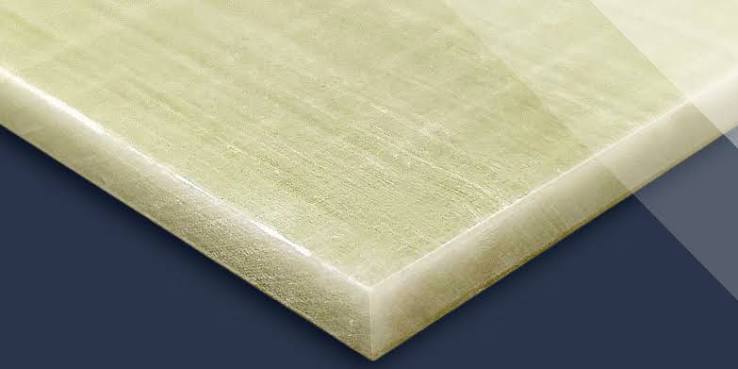
A machined edge on a thermoset laminate does not perform like the pressed faces of the same sheet. When G10, FR-4, glass phenolics, or other electrical-grade laminates are sawed, sheared, routed, or milled, the resin-rich surface layer is removed. What is left at the edge is the cross-section: layers of glass, paper, or fabric reinforcement held in cured resin, with no continuous resin film over them.
That exposed cross-section affects moisture uptake, electrical performance, mechanical durability, and chemical resistance. If the edge is not considered during material selection and on the drawing, it can become the weakest part of the component.
What changes at the cut edge?
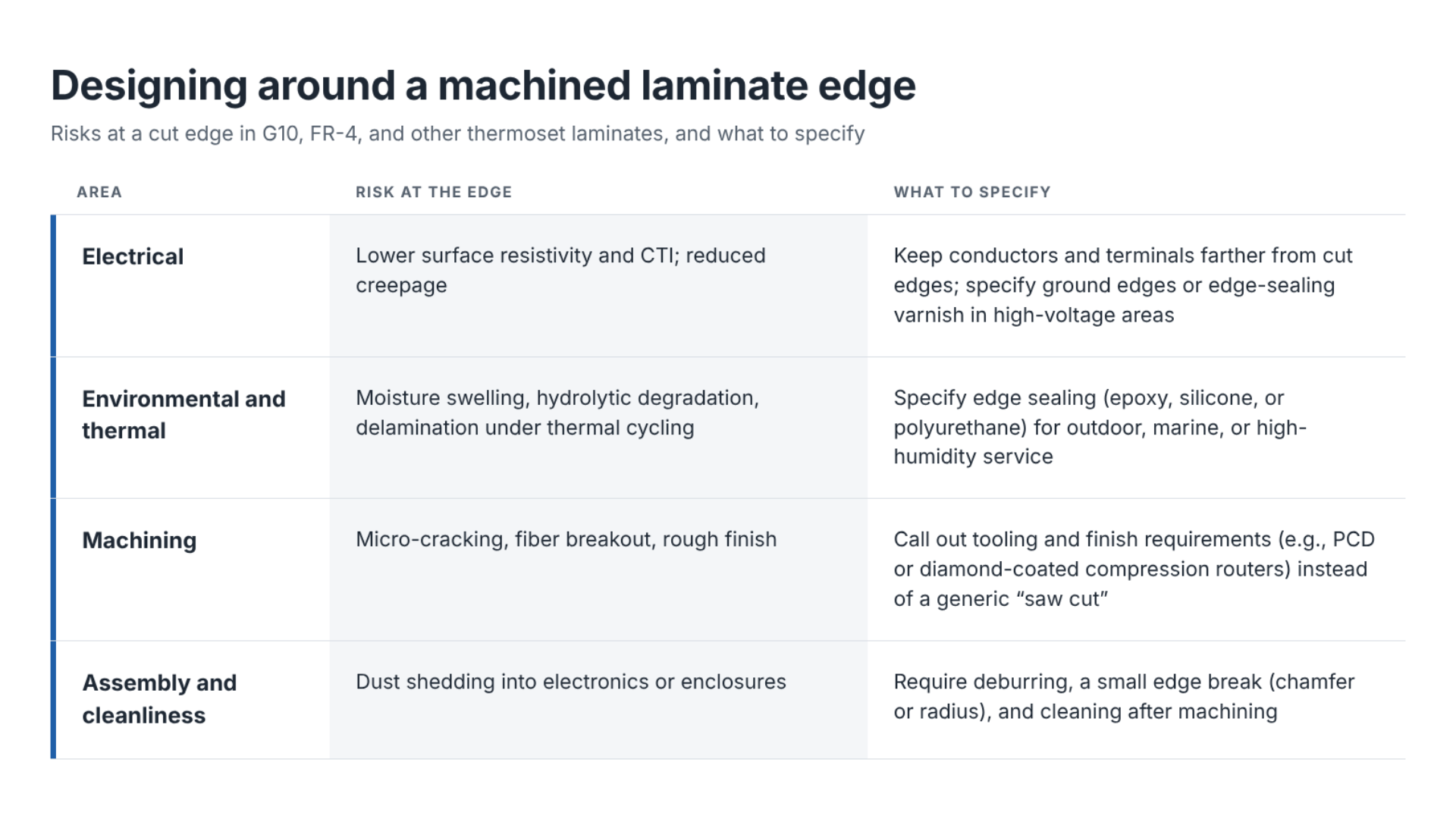
Moisture wicks in faster. Machining creates micro-fractures along the resin-fiber interface at the perimeter. Humidity, water, and coolants travel along these paths by capillary action. Absorption at the edge can run well ahead of the material’s bulk rate, which leads to swelling, internal stress, and gradual resin degradation.
Electrical performance drops. The pressed faces of a laminate carry a continuous resin film that gives high surface resistivity and good tracking resistance (CTI). A cut edge has exposed fiber-resin interfaces and micro-cracks that hold moisture and airborne contaminants. In high-voltage parts such as busbar supports, switchgear components, and EV battery module barriers, untreated edges are a common site for tracking and flashover.
Mechanical defects start at the edge. Aggressive cutting can cause micro-delamination, fiber pull-out, and fraying. These act as stress concentrators under vibration or cyclic loading. Raw edges can also shed glass or phenolic dust into sensitive assemblies, cleanrooms, or high-voltage enclosures.
Chemicals get past the surface plies. The top and bottom plies resist many fluids, but solvents, cleaning agents, and battery electrolytes can enter the core through exposed edges. The result can be localized softening or blistering.
What to put on the drawing
- Specify the edge finish. Do not leave it open. A saw-cut finish is usually fine for lower-stress spacers. A routed or milled finish holds tighter tolerances. A ground or polished finish suites edges that provide electrical isolation.
- Call out edge treatment where the enviornment requires it. For high humidity, outdoor, or chemical exposure, specify a post-machining sealer, such as epoxy or polyurethane brushed onto exposed edges and cured.
- Measure creepage from the machined edge When holds or high-voltage terminals sit near the perimeter, measure creepage and clearance from the actual cut edge, not only the nominal part outline.
Takeaway from the Cut Edge
Material datasheet values describe the laminate as manufactured, with its pressed surfaces intact. Once a part is machined, its edges behave differently. Accounting for that during material selection, and stating edge finish and treatment on the drawing, keeps the finished part closer to the properties that grade was chosen for initially,