

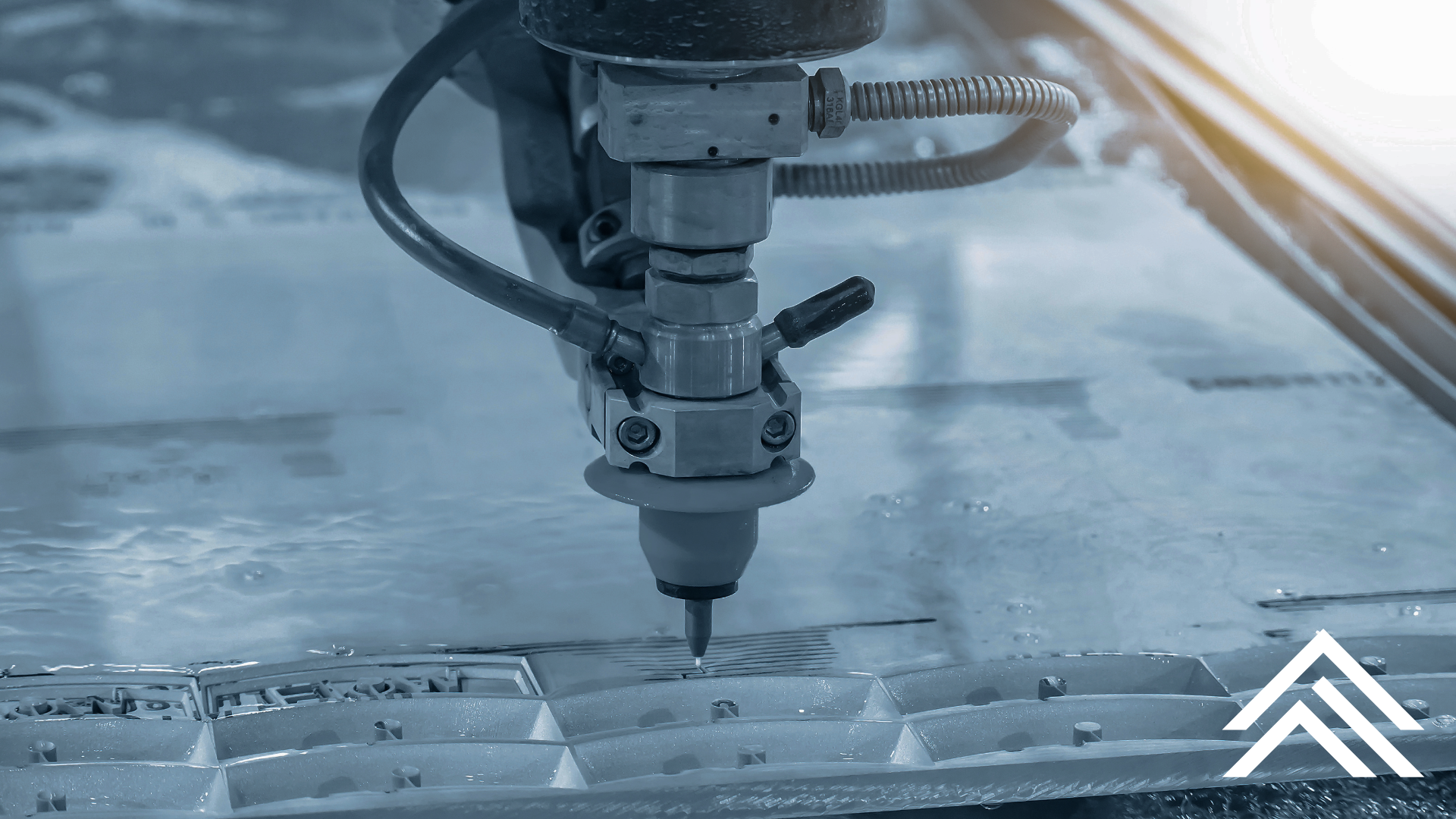
Ask most shops how to get consistent results machining fiber-reinforced composites (thermoset laminates), and the conversation usually starts with tooling. That’s not wrong, but it’s incomplete. Repeatable machining of abrasive composite materials comes from controlling an entire process, not from picking the right bit.
The Core Idea in Production Machining of Abrasive Composites
When you are machining composites, you’re not just removing material, you are controlling fracture.
Composite laminates aren’t uniform. They’re layered, non-homogeneous systems made of reinforcement fibers and resin. When you machine them, you’re not shearing material the way you would with metal, you’re actually controlling how the fibers and resin fracture under the cutting edge.
In the context of production machining of composites, repeatability means keeping that fracture behavior consistent from the first part to the last. That depends on four things staying stable together:
- A well-defined process window (speeds, feeds, chip load)
- Sharp, consistent tooling with geometry matched to the material
- Fixturing rigid enough to eliminate vibration and unsupported fiber lift
- Dust evacuation and heat management that keep the cut cool and clean
Let any one of these drift, and the symptoms show up fast: delamination, fuzzing, burning, or dimensional drift.
What Actually Drives Repeatability in Production Machining
There’s a lot to remember in production machining of abrasive materials like composites. Learn more about what it takes to keep fiber fracture and resin behavior consistent part after part.
Tooling Selection and Life Management
Abrasive reinforcement, glass, carbon, ceramic, wears through conventional HSS or uncoated carbide quickly. For production runs, polycrystalline diamond (PCD) or diamond-coated carbide tooling is typically what’s needed to hold edge quality and keep dimensions from drifting over the length of a run.
Tool life also needs to be defined differently than it would be for metal. The limit isn’t catastrophic failure, it’s the point where edge quality, fuzzing, or delamination cross an acceptable threshold. Waiting for a tool to break is waiting too long.
Geometry matters just as much as material:
- Compression tools (up/down helix) push the laminate toward its center, reducing breakout and delamination at entry and exit.
- Cross-cut, burr, or pineapple cutters work well for roughing passes, where fracture speed matters more than surface finish.
Speeds, Feeds, and Chip Load
The goal is simple to state and easy to get wrong: keep the tool cutting, not rubbing. Rubbing generates heat, and heat degrades resin and accelerates tool wear.
Typical parameters for CFRP and similar laminates run:
- Spindle speeds of 20,000–30,000 rpm
- Cutting speeds of 550–760+ m/min
- Chip loads held at roughly 0.001 in/tooth or higher for larger-diameter tools
These aren’t starting points borrowed from metal machining practice, they’re tuned to the specific material grade, thickness, tool diameter, and machine rigidity in front of you.
Fixturing and Vibration Control
Fixturing isn’t a setup detail here, it’s a process variable. Parts need full support through the cut to prevent chatter, flex, and fiber lift at entry and exit points.
Vacuum tables, spoil boards, backer plates, and custom fixtures all serve the same purpose: support thin laminates, reduce exit-side breakout, and minimize the vibration that drives delamination and dimensional instability.
If a process is producing inconsistent parts, fixturing is usually the first place to look, before touching the toolpath or swapping tooling.
Dust Extraction and Thermal Management
Dust from glass, carbon, and ceramic composites is abrasive, and carbon dust is also conductive, a real risk to machine electronics if it isn’t controlled, on top of the surface finish problems it causes.
Production environments generally need high-velocity, near-spindle extraction with HEPA filtration. On the heat side, the priorities are avoiding rubbing, holding proper chip load, and machining dry with strong extraction, or using cold air or cryogenic cooling where it’s appropriate. Liquid coolant can cause resin swelling or form an abrasive paste with the cutting debris, so it’s not a default choice here the way it might be for metal.
Toolpath and Entry/Exit Strategy
Climb milling is generally the better choice for composites, it reduces rubbing and manages fiber engagement more predictably than conventional milling, as long as tooling and fixturing are already solid.
Entry and exit points deserve deliberate design, not default settings. Done well, they minimize unsupported fiber lift, control the direction of cutting force, and reduce breakout around holes, pockets, and profile edges. Toolpaths proven out on metal or standard plastics don’t transfer automatically, first-article validation on the actual composite grade is standard practice, not an extra step.
Process Documentation and Validation
Repeatability gets engineered into the process up front, it isn’t something you inspect your way into after the fact. That means documenting:
- Material grade and preparation
- Fixture design and support strategy
- Tool selection and wear thresholds
- Heat and dust management approach
- Inspection criteria and first-article validation methods
And it means tracking tool-life limits, edge-quality thresholds, and process drift closely enough to catch a problem before it shows up as a bad part.
The Bottom Line on Abrasive Composites
Repeatable machining of abrasive composites comes from treating the laminate as what it is, a layered, non-homogeneous system, and building a process around that reality: PCD or diamond tooling with the right geometry, stable chip loads at high speeds, rigid and well-supported fixturing, aggressive dust management, and a documented, validated process window that keeps fiber fracture and resin behavior consistent part after part.
Get the process right, and the tooling choice stops being the hard part.