

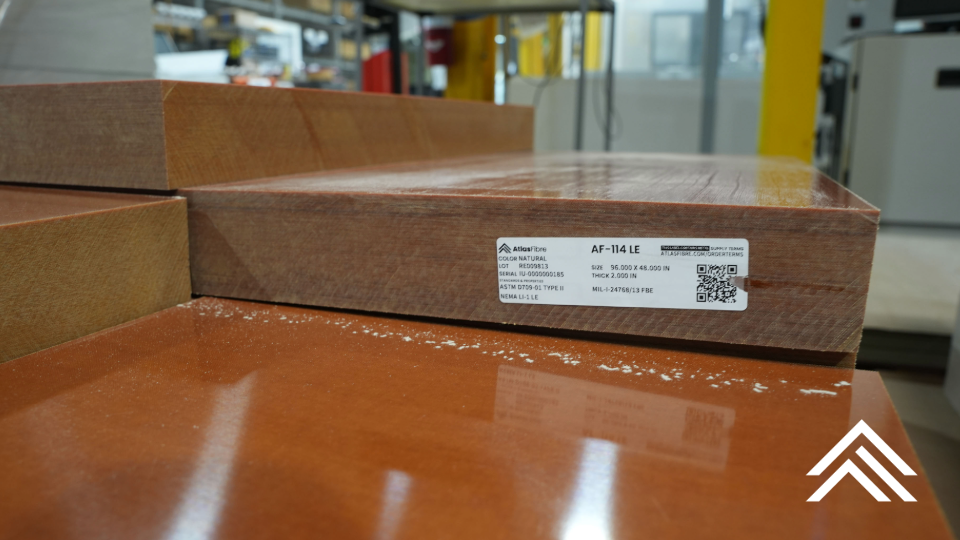
Material traceability depends on maintaining accurate information as material moves from manufacturing and receiving through storage, fulfillment, and fabrication. To strengthen that connection, Atlas Fibre is introducing serialized identification labels on full-size thermoset composite laminate sheets.
The new labels provide clearer material information directly on each sheet while supporting more reliable tracking throughout our operations and the broader supply chain.
What Information Is Included?
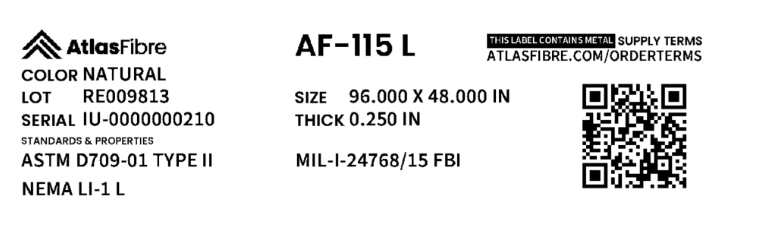
Each labeled sheet receives a unique serial number that distinguishes it from other sheets in inventory. The label also identifies important material and order information, including:
- Atlas Fibre material grade
- Lot and batch information
- Sheet dimensions
- Applicable standards and specifications
- A unique sheet-level serial number
Depending on the material, referenced specifications may include MIL-I-24768, NEMA LI-1, ASTM D709, and other applicable requirements.
Placing this information directly on the sheet gives receiving teams, inventory personnel, buyers, quality professionals, and fabricators a clearer way to confirm the material they are handling.
Why Serialized Identification Matters
Thermoset composite laminates are frequently selected for applications with specific mechanical, electrical, thermal, or dimensional requirements. When similar-looking grades are stored or processed alongside one another, dependable identification becomes especially important.
Serialized labels help preserve the connection between the physical sheet and its associated material information. This can support:
- More accurate material identification
- Improved lot and batch traceability
- Better inventory visibility
- Greater confidence during receiving and material handling
- More consistent information across the supply chain
The goal is straightforward: make it easier to identify the material and maintain that identity as the sheet moves through our facility and on to the customer.
RFID-Enabled Labels Built for Material Handling
The labels are produced from durable PET or BOPP material and contain RFID tags that support inventory tracking within Atlas Fibre’s operations. Compared with traditional paper labels, they are designed to withstand routine warehouse handling while releasing more cleanly from the sheet.
Because the labels are made from high-strength plastic and contain an embedded RFID component, they must be removed before the sheet is cut, machined, routed, or otherwise processed. This prevents label material or the RFID tag from entering machining operations.
What Customers Can Expect During the Rollout
Serialized labeling is being introduced as new material enters our warehouse. Customers may therefore receive a combination of labeled and unlabeled sheets while existing inventory continues to move through the supply chain.
An unlabeled sheet during this transition does not indicate a difference in material quality. It simply reflects the phased implementation of the new identification system.
As the rollout progresses, serialized labels will become increasingly common on full-size Atlas Fibre sheets.
An Ongoing Investment in Traceability
This initiative is part of Atlas Fibre’s continued investment in material identification, traceability, and inventory control. By connecting each sheet with clearer, sheet-specific information, we are strengthening the systems that support accurate fulfillment and dependable material handling.
For customers, that means better visibility into the material they receive and greater confidence that critical identification information remains connected to the sheet throughout its journey.
Questions about the new labels or the information included on your material? Contact the Atlas Fibre team for assistance.