

Comparing Performance, Durability, & Lifecycle Cost in Structural Applications
Aluminum has long been a standard choice for structural profiles, but it may not be the best fit for applications requiring electrical insulation, corrosion resistance, dimensional stability, or reduced weight.
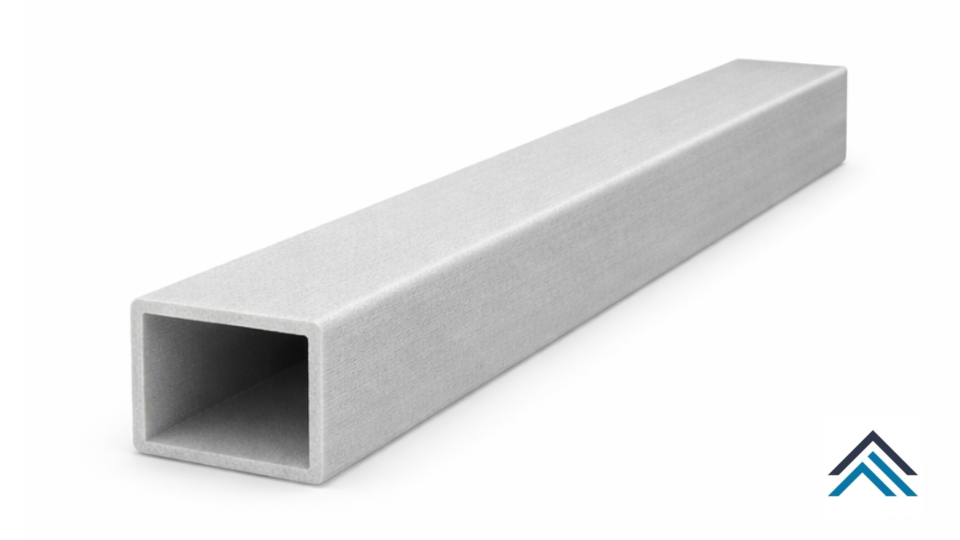
Pultruded thermoset composites combine reinforcing fibers with a durable resin system to create consistent, high-strength profiles. Because the fibers are aligned in the load direction, these materials can provide excellent structural efficiency while remaining nonconductive and resistant to corrosion and harsh environments.
For applications such as switchgear, transformers, battery systems, rail equipment, and industrial structures, moving from aluminum to pultruded composites may offer several advantages:
- High directional strength
- Low thermal expansion
- Electrical insulation
- Corrosion resistance
- Integrated profiles that can reduce secondary machining
Material selection should always reflect the operating environment, performance requirements, and overall component design. Atlas Fibre helps engineering and sourcing teams evaluate where pultruded composites may provide a stronger long-term solution.
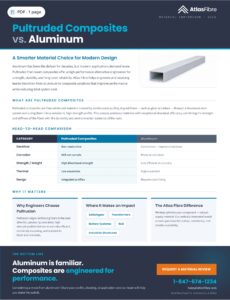
Download Atlas Fibre’s Pultruded Composites vs. Aluminum Comparison for a quick look at how the two materials differ – and where making the switch could improve performance and reduce total system cost.